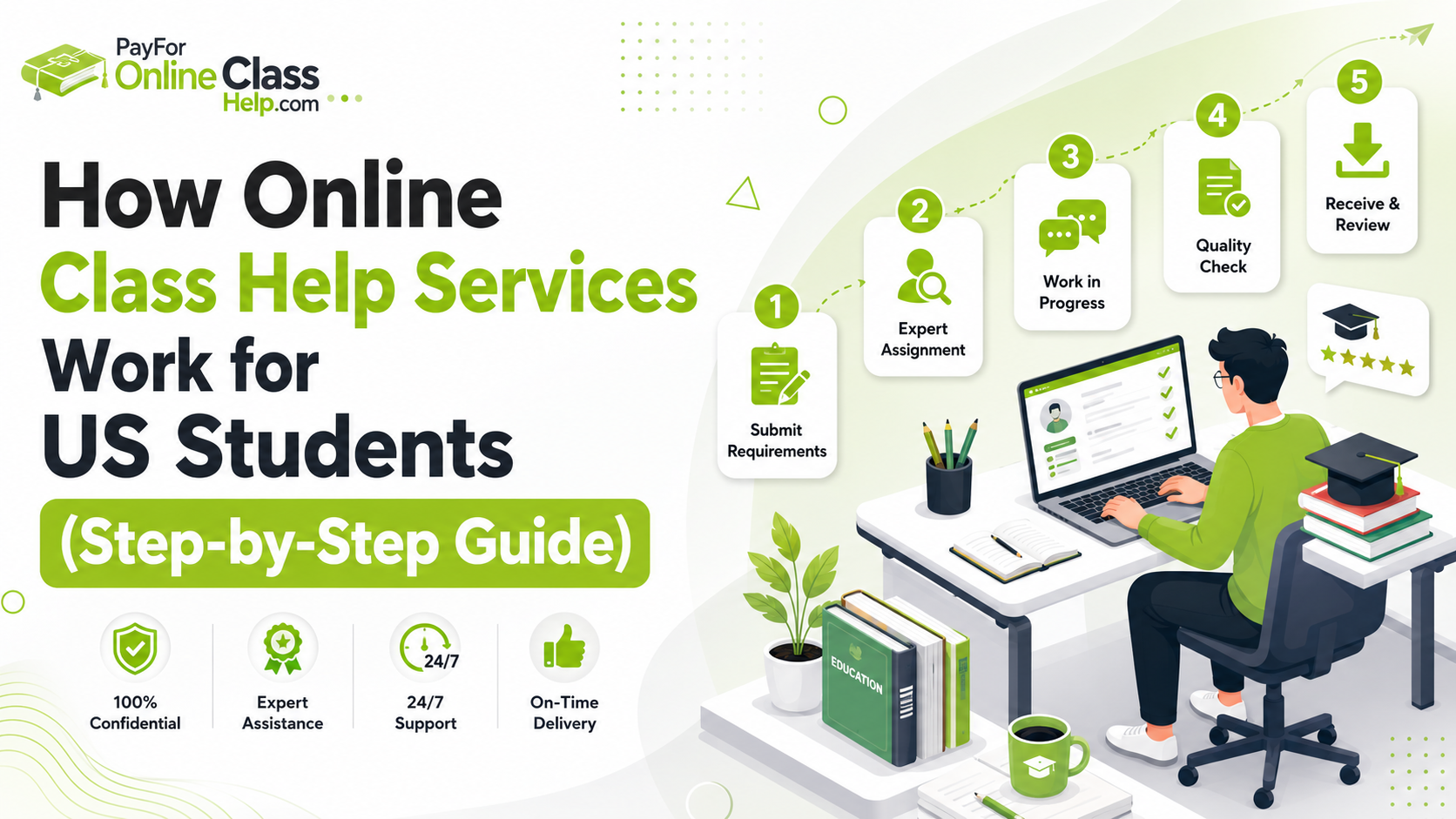
Online education in the United States has crossed a point where flexibility no longer means ease. Recent data shows that over 60% of US college students take at least one online course, while a large portion manage part-time or full-time work alongside studies. Deadlines do not adjust, grading rubrics remain strict, and instructor expectations often mirror traditional classrooms. This pressure has pushed many students to look for structured, reliable academic support.
Online class help services exist within this reality. They are not casual solutions. Now,a lot of you may think about how online class help works. Let us tell you, they follow a system designed to handle coursework with precision, consistency, and accountability.
Understanding how this system works is essential before making any decision. This guide entails all of the aspects in proper details so bookmark this tab today!
Breaking Down the Process of How Online Class Help Works
An online class help process operates through a layered workflow. Each stage builds on the previous one. When done correctly, this process ensures that nothing falls through gaps and every academic requirement receives attention.
Studies suggest that over 70% of students value structured academic support systems, as they reduce errors and missed deadlines. When managed properly, this approach can improve submission punctuality by up to 60%, ensuring every requirement is addressed effectively from start to finish.
Step 1: Deep Requirement Evaluation
The process does not begin with writing or submissions. It starts with a careful evaluation of the course itself, including syllabus requirements, grading patterns, deadlines, and instructor expectations.
This initial analysis helps create a clear roadmap for the entire workflow. It also identifies potential challenges early, ensuring the support provided is accurate, structured, and aligned with academic goals. This is where serious services separate themselves from unreliable ones.
Information Collected at This Stage
Students provide far more than just assignment details. A complete intake usually includes:
- Course syllabus with weekly breakdown
- Instructor guidelines and grading rubrics
- Login access or screenshots of the dashboard
- Assignment instructions with word limits
- Discussion board requirements
- Quiz formats and timing details
- Expected grade goals
This step often involves back-and-forth clarification. A professional service does not assume details. It asks.
Why This Stage Defines Everything
Courses in the US differ widely. A marketing class may focus on case studies, while a statistics course demands numerical accuracy and step-based solutions. Without full clarity, even a skilled expert can miss expectations.
At this stage, services identify:
- Grading weight distribution
- Strictness of deadlines
- Academic integrity checks used by the institution
- Instructor response patterns
This creates a working blueprint before any task begins.
Step 2: Precision-Based Expert Allocation
Assigning an expert is not a simple subject match. A biology expert cannot handle every biology course, as specialization within the field plays a key role. Subfields such as genetics, microbiology, or ecology require different expertise.
Course levels also matter, since undergraduate and advanced courses demand different depth of knowledge. Even instructor expectations and grading styles are carefully reviewed to ensure the right expert is selected for each specific requirement.
How Professional Services Assign Experts
They evaluate:
- Academic specialization within the subject
- Past performance in similar US courses
- Familiarity with citation styles such as APA, MLA, or Chicago
- Experience with platforms like Canvas, Blackboard, or Moodle
- Ability to handle continuous workload across weeks
Layered Selection Process
Many top-tier services use a filtering approach:
- Shortlist experts with subject alignment
- Check previous grades delivered in similar courses
- Confirm availability for full course duration
- Assign only after internal approval
This reduces the risk of inconsistency mid-course.
Step 3: Course Mapping and Strategic Planning
Once the expert is assigned, the next step involves building a detailed academic roadmap that outlines every task, deadline, and requirement in a structured way. This is where planning turns into performance, as each milestone is scheduled to ensure steady progress.
The roadmap also helps maintain consistency across assignments, discussions, and exams, reducing last-minute pressure and improving overall accuracy in submissions.
What a Course Plan Looks Like
A structured plan usually includes:
- Weekly task schedule
- Assignment priority levels
- Discussion post deadlines
- Quiz and exam preparation windows
- Buffer time for revisions
Academic Alignment
Experts align their work with:
- Rubric requirements for each assignment
- Expected tone of academic writing
- Depth of research required for higher grades
For example, a graduate-level paper demands critical analysis, not just description. This difference is built into the plan from the start.
Step 4: Secure Access and Controlled Environment
Many students hesitate at this stage, and rightly so because they doubt further what happens when you hire class help. Sharing course access requires trust. Reliable services address this with strict systems.
Access Handling Methods
- Use of secure systems to store credentials
- Restricted access limited to assigned expert only
- Optional use of VPN to match student location if needed
Data Protection Protocols
Strong services implement:
- Non-disclosure agreements for experts
- Encrypted communication systems
- No reuse or sharing of academic content
This step ensures both safety and continuity in course handling.
Step 5: Execution of Coursework
This stage carries the weight of the entire process, as consistent execution directly impacts overall academic performance. Every assignment, discussion post, and test contributes to final grades, making accuracy and timeliness essential.
Even small errors or delays can affect cumulative results, which is why careful monitoring and structured completion are prioritized throughout this phase.
Assignment Development Process
Experts follow a structured academic method:
- Detailed reading of instructions
- Research through credible academic sources
- Draft creation based on rubric expectations
- Proper citation and referencing
- Internal proofreading
Each assignment is treated as a graded opportunity, not a routine task.
Handling Discussion Boards
Discussion posts require engagement, not just answers. Experts ensure:
- Original, thoughtful responses
- Timely replies to classmates
- Alignment with weekly themes
- Consistent tone across posts
This maintains participation marks, which often carry significant weight.
Managing Multiple Deadlines
Experts track:
- Overlapping assignments
- Time-sensitive quizzes
- Submission windows across different time zones
This level of coordination prevents last-minute errors.
Step 6: Academic Quality Control
Before any submission, the work goes through a thorough quality assurance process that includes reviewing accuracy, formatting, grammar, and alignment with instructions. This step helps identify and correct any errors before final delivery.
It acts as a safeguard for grades by ensuring the content meets academic standards, follows rubrics, and maintains consistency across all requirements.
Multi-Level Checks
- Grammar and sentence clarity
- Logical flow of arguments
- Compliance with assignment instructions
- Citation accuracy
- Plagiarism review
Human and Tool-Based Review
While tools detect errors, human review ensures:
- Natural academic tone
- Relevance of arguments
- Depth of analysis
This combination reduces risk and improves overall quality.
Step 7: Continuous Communication and Reporting
Silence creates doubt, which is why professional services maintain consistent communication throughout the entire course. Regular updates, progress tracking, and quick responses help students stay informed at every stage.
This transparency builds trust, reduces confusion, and ensures that any changes in requirements or deadlines are addressed immediately for smooth academic progress.
Types of Updates Provided
- Completion confirmations
- Draft previews if requested
- Deadline reminders
- Performance insights
Communication Channels
- Direct messaging systems
- Email updates
- Dedicated support teams
This transparency allows students to stay aware without constant follow-up.
Need a Reliable Class Helper USA?
For students who are consistently falling behind, the option to pay someone to do your online class has become a practical solution. These services handle everything — quizzes, assignments, and exams — so you can focus on what matters most. If this sounds like your situation, looking into a trusted paid service for online class help could be worth it..
Step 8: Quiz and Exam Management
Quizzes and exams require accuracy under time pressure. This stage demands both speed and knowledge.
Preparation Before Exams
Experts often review:
- Previous assignments
- Key course concepts
- Instructor focus areas
During the Exam
- Quick question analysis
- Prioritization of high-weight sections
- Accurate responses within limited time
This approach minimizes errors while maximizing scores.
Step 9: Feedback Integration and Performance Adjustment
After submission, the process does not stop, as instructor feedback becomes a valuable resource for improvement. Experts carefully review comments, grades, and suggestions to understand where adjustments are needed.
This feedback loop helps refine future assignments, correct recurring mistakes, and continuously enhance performance, ensuring steady academic growth over time.
What Experts Analyze
- Comments on writing style
- Points deducted and reasons
- Preferred structure or format
Adjustments Made
- Improved argument depth
- Better citation handling
- Alignment with instructor expectations
This continuous refinement improves performance over time.
Step 10: Course Completion and Final Review
At the end of the course, everything is reviewed to ensure nothing remains incomplete, including assignments, discussions, quizzes, and final assessments. This final audit helps confirm that all requirements have been met according to the syllabus.
It also identifies any missing elements so they can be addressed promptly, ensuring a clean and complete academic record before course closure.
Final Checks Include
- All assignments submitted
- Discussions completed
- Exams taken
- Grades reviewed
Deliverables to Students
- Record of completed work
- Final grade summary
- Clarifications if needed
This ensures a clean and complete course finish.
Final Perspective On How Online Class Help Services Work
You must have now understood how online class help works, they operate through a detailed and disciplined process. Each step, from requirement analysis to final submission, plays a direct role in academic success. It is a system built around planning, execution, and continuous improvement.
For US students facing demanding schedules, this approach offers a practical path to stay on track. The effectiveness depends on understanding the process, choosing the right service, and maintaining awareness throughout the course.
When used with clarity and caution, these services transform from simple support into a strategic academic advantage.
Frequently Asked Questions
1. How does the process of online class help begin?
It starts with sharing course details such as syllabus, login access, and deadlines. The service reviews workload and builds a structured plan. This early evaluation ensures accuracy, timeline control, and proper expert assignment.
2. Who completes the coursework in these services?
Qualified subject experts handle the coursework based on specialization and academic experience. Many hold advanced degrees and understand US grading systems. Their role is to follow instructions while maintaining academic quality.
3. How are deadlines managed in online class help?
Services track all deadlines using internal systems to avoid late submissions. Experts follow strict schedules aligned with course timelines. This ensures consistency across weekly tasks, exams, and discussions.
4. Can students track progress during the course?
Most services provide regular updates on completed tasks and upcoming work. Some offer dashboards or direct communication with experts. This keeps students informed and in control throughout the course.
5. What happens after the course is completed?
All completed work remains accessible for review and reference. Students can check submissions, feedback, and grades. This also helps them understand course material if they wish to revisit it later.